25/09/2026
Prof. Dr. Michael E. Webber, a faculty member at the University of Texas at Austin known for his work in energy, technology, policy, and the environment, delivered a seminar titled "Global Trends in Energy and AI" at Sabancı University. Held at the Faculty of Engineering and Natural Sciences, the seminar saw Webber address the global energy transition, rising energy demand, and the impact of artificial intelligence and technological innovations on energy systems.
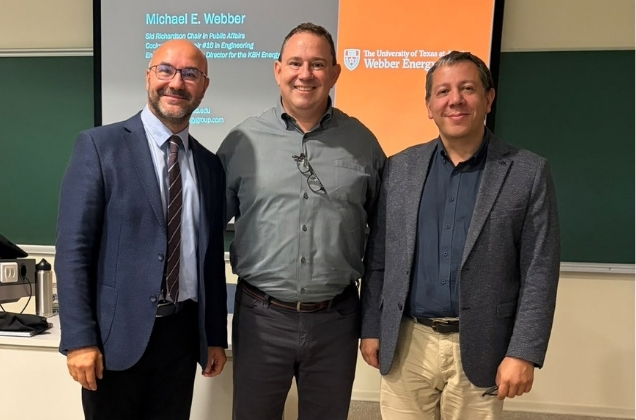
At the opening of the seminar, Prof. Dr. Burç Mısırlıoğlu, Vice Dean for Research at the Sabancı University Faculty of Engineering and Natural Sciences, gave an introductory speech presenting Prof. Michael E. Webber and his work. The seminar was attended by Vice President for Research and Development Prof. Dr. Mehmet Yıldız and Dean of the Faculty of Engineering and Natural Sciences Prof. Dr. Emre Erdem, as well as numerous academics and students.
"Energy is the Key to Unlocking Solutions to Other Problems"
Prof. Dr. Michael E. Webber began his talk by highlighting the importance of energy for humanity and explained its pivotal role by referencing the "Smalley List"—a list of fundamental problems facing humanity compiled by Nobel Prize-winning scientist Rick Smalley. Noting that energy tops this list, Webber stated that resolving energy issues could contribute to solving problems in many other areas, ranging from water and food to the environment and poverty.
Emphasizing that energy systems always require striking a balance between competing priorities, Webber stated that the energy transition today is shaped by a new "trilemma." He identified these three core issues as: expanding access for those currently without it, decarbonizing the energy system, and determining how to operate energy systems in a warming world. He explained that this transformation is unfolding alongside population and economic growth, urbanization, industrialization, and electrification, as well as technological trends such as digitalization, decarbonization, and decentralization.
Noting that transformations in energy and technology have historically gone hand in hand, Prof. Dr. Webber illustrated these shifts with examples ranging from lighting to transportation. He pointed out that certain energy sources once viewed as solutions to environmental problems have, over time, become part of new environmental challenges.
Energy Sources Have Transformed Throughout History
Highlighting the historical succession of transformations in energy and technology, Webber described the evolution of lighting technologies—moving from solid fuels like candles and wooden torches to whale oil and kerosene, and subsequently to gas and electricity. He noted that a similar transformation occurred in transportation, tracing the shift from muscle power and wind to steam power, gasoline engines, and electricity.
Using data from the United States to illustrate how different energy sources have come to the fore in different eras, Webber described the progression from the wood era to the coal era, and subsequently to the oil era. Noting that natural gas is closing the gap with oil while renewable energy sources are rapidly rising, Webber emphasized that energy systems continue to transform alongside technological advancements and changing needs.

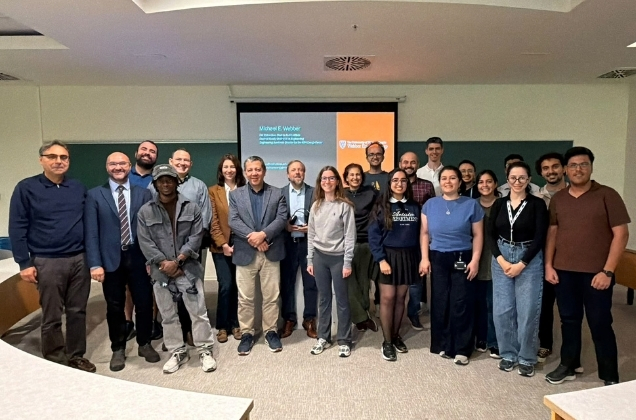
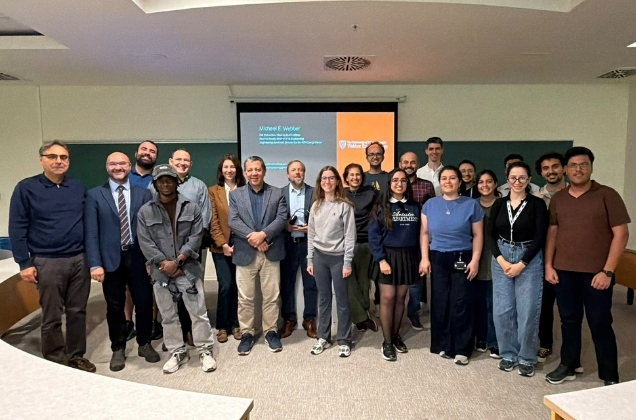
Following his presentation, Prof. Dr. Michael E. Webber answered questions from academics and students. The seminar concluded with a group photo taken with the participants. After the event, Webber visited SUNUM and had the opportunity to examine the research being conducted at the center.